Longhorn Handwritten Font for Authentic Branding
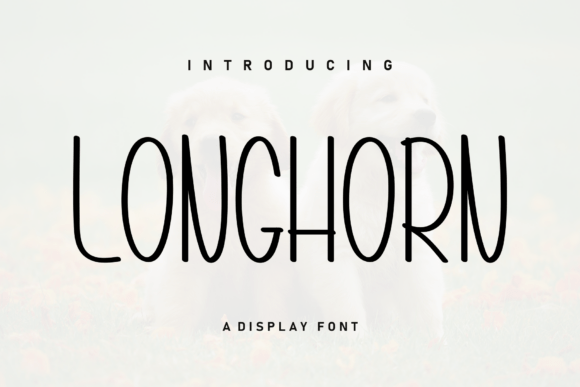
If you're a small business owner who designs your own marketing materials—or works closely with a designer—you know how much a single typeface can shape how customers perceive your brand. Longhorn isn’t just another handwritten font. It’s a marker-drawn display font with relaxed energy and sporty confidence—friendly without being childish, expressive without sacrificing clarity. That balance makes it unusually versatile across real-world touchpoints where consistency matters most.
I first used Longhorn for my small-batch candle studio’s product labels and Instagram story highlights. Before that, I’d cycled through overly delicate scripts that vanished on matte kraft paper or bold sans serifs that felt too corporate for our handmade vibe. Longhorn landed right in the middle: warm enough for a thank-you card, strong enough for a storefront sign, and distinctive enough that customers started recognizing our packaging before seeing the logo.
Where Longhorn Builds Real Brand Trust
Customers don’t judge your font choice consciously—but they *do* absorb tone, care, and intention through every visual detail. Longhorn supports trust by delivering cohesion. When your café menu, takeaway cup sleeve, loyalty card, and Instagram bio all share the same confident, hand-drawn rhythm, people begin to sense intentionality. That’s professionalism—not perfection, but purposeful design.
It works especially well for businesses rooted in craft, wellness, lifestyle, or local community: a boutique fitness coach’s workshop banners, a ceramicist’s limited-edition box stamp, a plant shop’s seasonal flyer, or a wedding planner’s digital invitation suite. Because Longhorn is a display font—not meant for body text—it shines where attention needs to land: logos, headlines, packaging accents, social media cover images, and website hero sections.
Practical Uses Across Your Business Ecosystem
Here’s how Longhorn fits into everyday materials—without overcomplicating your workflow:
- Logos & branding marks: Use Longhorn for primary wordmarks (e.g., “Haven Bakery” or “River & Stone Co.”), especially when paired with a clean sans serif for taglines or contact info.
- Packaging & labels: Its thick, open letterforms hold up beautifully at small sizes—even on 2-inch candle jars or tea bag tags—without blurring or losing character.
- Social media graphics: Stands out in Instagram feed thumbnails and Pinterest pins thanks to its high-contrast strokes and natural irregularity.
- Printed collateral: Reads clearly on uncoated paper, kraft stock, and even chalkboard-style menus—no ink bleed or pixelation issues common with finer script fonts.
- Digital ads & email headers: Adds human warmth to otherwise generic ad templates, helping your message feel personal rather than promotional.
Pairing Longhorn Thoughtfully
Like any strong personality, Longhorn works best when balanced. Think of it as your brand’s voice—distinctive and memorable—but not its entire vocabulary. Pair it with a neutral, highly legible companion: a friendly sans serif like Montserrat or Inter for body copy, captions, and pricing; or a soft serif like Lora or Merriweather for printed brochures or blog headers. Avoid pairing with other decorative or script fonts—that dilutes impact and creates visual noise.
For example, my café uses Longhorn for the logo and daily special board headers, then switches to Inter for the full menu, staff names on aprons, and Wi-Fi password cards. The contrast feels intentional, not accidental—and customers tell me the space “feels put-together, but never stiff.”
Testing Before Committing
Before locking Longhorn into your full brand system, test it in context. Type out your business name at three sizes: 24pt (for web banners), 12pt (for product labels), and 8pt (for tiny sticker tags). Print them. View them on your phone screen. Hold them next to your current packaging or signage. Does it still feel like *you*? Does it stay legible under fluorescent lighting or midday sun?
You’ll also want to check licensing. Longhorn is a commercial font—meaning it’s safe for use on your own products, packaging, social posts, and client-facing websites—but if you’re selling editable Canva templates, designing merch for resale, or creating digital downloads for others to use, verify the license covers those specific uses. Most reputable font vendors clarify this upfront; when in doubt, reach out directly.
Why This Font Fits Small Business Realities
Small businesses rarely have the budget for custom typography—but we *do* need differentiation. Longhorn delivers that without demanding design expertise. It’s not a trend-chasing novelty; it’s a reliable, expressive tool that scales from a single Etsy listing title to a cohesive retail environment. It supports storytelling—not by shouting, but by inviting closer attention. And because it’s built for display use, you won’t waste time wrestling with kerning or line-height adjustments just to make it readable.
Whether you’re launching a skincare line, rebranding your neighborhood florist, or designing your first set of wedding stationery, Longhorn helps your visuals reflect the care you put into your work—not just what you sell, but how you show up for your customers. That authenticity, repeated consistently across every surface your brand touches, is what builds recognition, loyalty, and quiet confidence in your business.